Buy futbolinspain.com ?
We are moving the project
futbolinspain.com .
Are you interested in purchasing the domain
futbolinspain.com ?
domain@kv-gmbh.de · 0541-91531010
Buy futbolinspain.com ?
What is the difference between quel and lequel?
The main difference between "quel" and "lequel" is that "quel" is a general question word that means "which" or "what," while "lequel" is a specific question word that means "which one" or "which ones." "Quel" is used when asking a general question about something, while "lequel" is used when asking a specific question about a choice or selection among a limited number of options. For example, "Quel livre préfères-tu?" means "Which book do you prefer?" and "Lequel de ces livres préfères-tu?" means "Which one of these books do you prefer?" **
Which French relative pronouns are there: lequel or dont?
The French relative pronouns "lequel" and "dont" both serve different purposes. "Lequel" is used to refer to a specific noun and has different forms depending on the gender and number of the noun it refers to. On the other hand, "dont" is used to indicate possession or to introduce a relative clause with verbs that require the preposition "de." Both pronouns are important for constructing complex sentences and adding specificity to the language. **

Similar search terms for Lequel
Top-Angebote
Products related to Lequel:
-
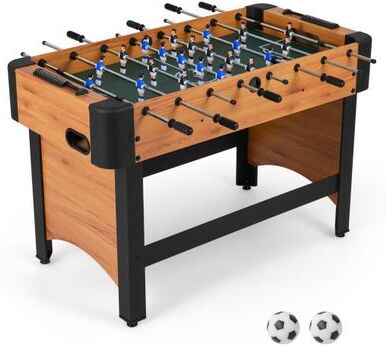
All Categories Goods Four Players Soccer Tabletop Game, Interactive Remote Control Football Toy, Mini Desktop Sports Competition Set Four Players Soccer Tabletop Game, Interactive Remote Control Football Toy, Mini Desktop Sports Competition SetTurn any table into a fastpaced stadium with this tabletop soccer game designed for nonstop family fun and friendly competition. Perfect for kids, teens, and adults, this interactive mini football set brings everyone together for exciting matches...439,97 $*Shipping: 0,00 $Secure redirect to the provider
-
Inspired Finds Famous Soccer Player Canvas Poster Wall Art For Modern Sports Room Decor 11.81x16.54in Unframed spain Duo EnergyBring the energy of the game into your space with this striking soccer poster wall art that captures iconic football moments in bold, modern style. Designed for fans who live and breathe the sport, this canvas instantly transforms any wall into a...34,99 $*Shipping: 0,00 $Secure redirect to the provider
-
Inspired Finds FamilyFun Hive Wooden Board Game For 2 Players FamilyFun Hive Wooden Board Game For 2 PlayersBring laughter and friendly competition to your home with this highquality wooden board game designed for 2 players and family fun. Perfect for parents and children to enjoy together, the Hive board game offers easytolearn rules and engaging play...43,99 $*Shipping: 0,00 $Secure redirect to the provider



-
When is "que" used and when is "lequel" used?
"Que" is used as a relative pronoun to refer to things or people in a general sense, while "lequel" is used to refer to specific things or people. For example, "le livre que j'ai lu" (the book that I read) refers to a specific book, while "le livre sur lequel j'ai écrit" (the book on which I wrote) refers to a specific book. "Lequel" is also used when the antecedent is preceded by a preposition, such as "à," "de," or "sur." **
-
What is the French grammar for prepositions before "lequel," etc.?
In French grammar, when using relative pronouns like "lequel" (which means "which" or "whom"), the preposition always comes before the pronoun. For example, you would say "sur lequel" (on which), "avec laquelle" (with whom), or "dans lesquels" (in which). This rule applies to all the forms of "lequel" depending on gender and number. **
-
When do you use "qui" and when do you use "lequel"?
"Qui" is used to refer to people or animals, and it is the subject of the sentence. For example, "La personne qui parle" (The person who is speaking). On the other hand, "lequel" is used to refer to things or to people when the antecedent is introduced by a preposition. For example, "La maison dans laquelle j'habite" (The house in which I live). **
-
Can you help me with the French relative pronouns lequel and dont?
Of course! The relative pronoun "lequel" is used to refer to a previously mentioned noun and can be masculine, feminine, singular, or plural. It has different forms depending on the gender and number of the noun it refers to. On the other hand, "dont" is used to replace "de + noun" and is used to indicate possession or relationship. It is used to connect a main clause to a subordinate clause. I can provide more specific examples or help with any other questions you may have about these relative pronouns. **


How much do soccer players in the lower professional leagues earn?
Soccer players in the lower professional leagues typically earn a wide range of salaries, with some players earning as little as a few hundred dollars per week, while others may earn a few thousand dollars per week. The exact amount can vary depending on factors such as the player's experience, skill level, and the financial resources of the team. In general, players in the lower professional leagues do not earn as much as those in the top-tier leagues, but they can still make a living from playing soccer. **
When do we use ce qui, ce que, qui, que, dont, and lequel?
We use "ce qui" when the subject of the verb is unknown or unspecified. "Ce que" is used when the object of the verb is unknown or unspecified. "Qui" is used as the subject of the verb, while "que" is used as the direct object of the verb. "Dont" is used to indicate possession or relationship, and "lequel" is used to refer to a specific noun that has been previously mentioned. **
Top-Angebote
Products related to Lequel:
-
Bronzhaus Bronze Soccer Players Sculpture – Dynamic Dual-Player Figurine On Marble BaseCondition: This sculpture is in perfect condition Bronze Dimensions with Marble Base: Height 9 inches X Width 8 inches Marble Dimensions:5 inches X 3 inches Height without base:6 inches Weight:8 LBS Inventory:61EP7683316 Original or Reproduction:…294,99 $*Shipping: 0,00 $Secure redirect to the provider
-
All Categories Goods Four Players Soccer Tabletop Game, Interactive Remote Control Football Toy, Mini Desktop Sports Competition Set Four Players Soccer Tabletop Game, Interactive Remote Control Football Toy, Mini Desktop Sports Competition SetTurn any table into a fastpaced stadium with this tabletop soccer game designed for nonstop family fun and friendly competition. Perfect for kids, teens, and adults, this interactive mini football set brings everyone together for exciting matches...439,97 $*Shipping: 0,00 $Secure redirect to the provider
-
What is the difference between quel and lequel?
The main difference between "quel" and "lequel" is that "quel" is a general question word that means "which" or "what," while "lequel" is a specific question word that means "which one" or "which ones." "Quel" is used when asking a general question about something, while "lequel" is used when asking a specific question about a choice or selection among a limited number of options. For example, "Quel livre préfères-tu?" means "Which book do you prefer?" and "Lequel de ces livres préfères-tu?" means "Which one of these books do you prefer?" **
-
Which French relative pronouns are there: lequel or dont?
The French relative pronouns "lequel" and "dont" both serve different purposes. "Lequel" is used to refer to a specific noun and has different forms depending on the gender and number of the noun it refers to. On the other hand, "dont" is used to indicate possession or to introduce a relative clause with verbs that require the preposition "de." Both pronouns are important for constructing complex sentences and adding specificity to the language. **
-
When is "que" used and when is "lequel" used?
"Que" is used as a relative pronoun to refer to things or people in a general sense, while "lequel" is used to refer to specific things or people. For example, "le livre que j'ai lu" (the book that I read) refers to a specific book, while "le livre sur lequel j'ai écrit" (the book on which I wrote) refers to a specific book. "Lequel" is also used when the antecedent is preceded by a preposition, such as "à," "de," or "sur." **
-
What is the French grammar for prepositions before "lequel," etc.?
In French grammar, when using relative pronouns like "lequel" (which means "which" or "whom"), the preposition always comes before the pronoun. For example, you would say "sur lequel" (on which), "avec laquelle" (with whom), or "dans lesquels" (in which). This rule applies to all the forms of "lequel" depending on gender and number. **
Similar search terms for Lequel
-
Inspired Finds Famous Soccer Player Canvas Poster Wall Art For Modern Sports Room Decor 11.81x16.54in Unframed spain Duo EnergyBring the energy of the game into your space with this striking soccer poster wall art that captures iconic football moments in bold, modern style. Designed for fans who live and breathe the sport, this canvas instantly transforms any wall into a...34,99 $*Shipping: 0,00 $Secure redirect to the provider
-
Inspired Finds FamilyFun Hive Wooden Board Game For 2 Players FamilyFun Hive Wooden Board Game For 2 PlayersBring laughter and friendly competition to your home with this highquality wooden board game designed for 2 players and family fun. Perfect for parents and children to enjoy together, the Hive board game offers easytolearn rules and engaging play...43,99 $*Shipping: 0,00 $Secure redirect to the provider
-
Inspired Finds Famous Soccer Player Canvas Poster Wall Art For Modern Sports Room Decor 19.69x27.56in Unframed spain Duo EnergyBring the energy of the game into your space with this striking soccer poster wall art that captures iconic football moments in bold, modern style. Designed for fans who live and breathe the sport, this canvas instantly transforms any wall into a...34,99 $*Shipping: 0,00 $Secure redirect to the provider
-
When do you use "qui" and when do you use "lequel"?
"Qui" is used to refer to people or animals, and it is the subject of the sentence. For example, "La personne qui parle" (The person who is speaking). On the other hand, "lequel" is used to refer to things or to people when the antecedent is introduced by a preposition. For example, "La maison dans laquelle j'habite" (The house in which I live). **
-
Can you help me with the French relative pronouns lequel and dont?
Of course! The relative pronoun "lequel" is used to refer to a previously mentioned noun and can be masculine, feminine, singular, or plural. It has different forms depending on the gender and number of the noun it refers to. On the other hand, "dont" is used to replace "de + noun" and is used to indicate possession or relationship. It is used to connect a main clause to a subordinate clause. I can provide more specific examples or help with any other questions you may have about these relative pronouns. **
-
How much do soccer players in the lower professional leagues earn?
Soccer players in the lower professional leagues typically earn a wide range of salaries, with some players earning as little as a few hundred dollars per week, while others may earn a few thousand dollars per week. The exact amount can vary depending on factors such as the player's experience, skill level, and the financial resources of the team. In general, players in the lower professional leagues do not earn as much as those in the top-tier leagues, but they can still make a living from playing soccer. **
-
When do we use ce qui, ce que, qui, que, dont, and lequel?
We use "ce qui" when the subject of the verb is unknown or unspecified. "Ce que" is used when the object of the verb is unknown or unspecified. "Qui" is used as the subject of the verb, while "que" is used as the direct object of the verb. "Dont" is used to indicate possession or relationship, and "lequel" is used to refer to a specific noun that has been previously mentioned. **
* All prices are inclusive of VAT and, if applicable, plus shipping costs. The offer information is based on the details provided by the respective shop and is updated through automated processes. Real-time updates do not occur, so deviations can occur in individual cases. ** Note: Parts of this content were created by AI.